Table / Sponsorship Request Access
For additonal inforamtion send an email to pw25_awardsgala@newyorkmoves.net
or to request code over the phone 646.489.1633
Check Spam for code
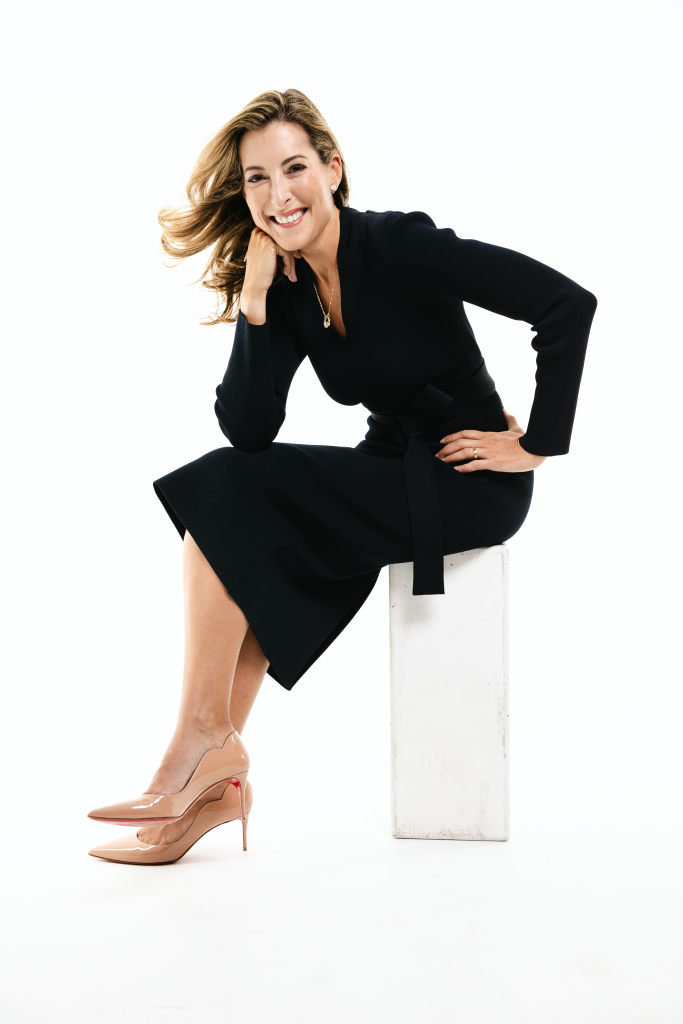
“Building trust between people, between teams, between leaders, between peers, between competitors, is everything.”
The qualities that make for a person who has Power, a person with Power. What do you think are the qualities?
Number one, someone who doesn’t seek it. I think that’s really important. Number two, I really gravitate towards leaders who believe it’s their role. The most important role is to create other leaders. And that doesn’t mean that there can’t be a whole group of leaders. You know, there’s a quote that I love, which is, ‘you can lead from where you stand.’ So, a leader who believes it’s their priority to create leaders, I think, is a very important and impactful leader. So someone who doesn’t seek it, someone who prioritizes creating leaders. And then three is, I believe, someone who has a sort of a vision, or a North Star, or a moral compass to do no harm and to leave something just a little bit better than how they found it. If that’s the goal, then I think that makes for a really great leader and someone who can be in a position of power and influence.
With all of the divided issues in the world we have today—from gun violence to gender equality, to child poverty—which do you think is the most pressing?
It’s very controversial, so you might not want to use it, but let’s talk about it. I think it’s the pace at which technology is advancing. Why? Because our lives are changing. And the question is, is it changing for the better? Have we built proper guardrails in place to make sure that the technology that we’re innovating is going to be beneficial and not harmful? So I’ll give you an example. We talk about AI all the time. Everybody talks about AI. And in a lot of ways, AI is really exciting. AI can read millions and millions of mammograms from women all over the world and try to spot breast cancer before our machines can spot it before our doctors can spot it. That’s fantastic. We could eradicate diseases. There’s also a lot of fear that AI is going to remove jobs. We already know that high-tech companies like Google and Facebook are firing engineers left and right. And I worry about people not knowing how to do basic tasks, and there being some kind of sales pitch that, well, with new technology, you won’t have to cook your dinner. You won’t have to clean your house, you won’t have to drive yourself. This is the part that’s very controversial, perhaps, but like, what is the point of living if you don’t cook your own meals, if you don’t care for your own family, what is the point of living?
What do you think is the number one action that we all can take to make society a better place?
Since pre-teen to where I am now in my mid-40s, my world has gotten bigger every year. It’s gotten bigger because when I was 12, I had access to AOL and chat rooms, and it just grew and grew and grew. And the reason I was a few minutes late is because colleagues of mine just came to my house, they’re visiting from India, and it’s their first time in the United States. And they’re staying with me for a couple of days, and my world has gotten huge. And there are a lot of really great things about that. But I think the one thing that we can do for our society to get stronger is to invest in our communities, because even though the world is huge, we live here for the most part. I love this quote. As a woman, the founder of Fast Forward, Rose Fast, uses this quote when she introduces her workshops to people. Mother Teresa says, ‘If you want to change the world, go home and love your family.’ Invest in your small communities, your grocery shops, your coffee shops, learn people’s names, get involved in the schools, get involved in the health care. Health care in Boston is at least starting to move back into communities. Yes, there are the big Harvard teaching hospitals, but they are now building outposts in communities so that doctors and nursing staff can get to know families. I’d like to think that when we strengthen our communities, we don’t lose what’s great about our global access, but we spend a little bit more time and resources on making the places we live a little smaller, more connected.
Can you tell us about a time in which you encountered a difficult challenge in life? And how did you overcome this challenge?
Well, I will share one, maybe two. We’ll see what you think about the first. When I had my first child, I was back to the office four days later, and I was physically not ready for that. I was emotionally not ready for that. And why did I do that? Because my identity was at the office, and because I felt a loss of control, and because I felt like that was what was expected of me. Two weeks after I got back, one of the young women in the office who didn’t work for me directly said, ‘Can I speak with you?’ And I said, ‘Sure.’ And she says, ‘You know, I’ve always looked up to you. I’ve always admired your career and your ambition and how you sort of grab for it, and you don’t ask for permission. And I just think you’re incredible. But what do you think it says to the rest of us women who want to have families, that you came back to the office four days later? Because what it says to me is that that’s how you win it professionally.’ And I was like, ‘Wow.’ I mean, I was an emotional mess, by the way, because you just are not healthy for months and months after giving birth. And I was like, well, ‘thank you for having the courage to say that. Can I think about what you said? Can we talk again in a few days?’ She said ‘Yes.’ And she left. I cried on my walk home.
I was so proud that I was able to walk to the office and that I was showing up for work. I didn’t see how that would read to other people. So I thought a lot about it. I did a lot of introspection, and I took her for coffee at the end of that week. It was a Monday, so Friday I took her for coffee. And I said, ‘Thank you. You’re right. I didn’t see it that way. And I’ll, to be honest with you, I wouldn’t wish this on anybody. I don’t feel well. I don’t look well. I miss my daughter. And I did feel like I had to be there or my position would be at risk. Not because anybody made me feel that way, but because I made me feel that way. I’m going to make a different decision next time.’ So we became very close, and I ended up hiring her at another company. She went on; she had children. She took maternity [leave]. And, I was just so grateful for that moment. When I had my second daughter, 22 months later, I had a different boss, and he was worried about my maternity leave. And I said, ‘I’ll be back in seven weeks.’ And he’s like, ‘Seven weeks?’ And I was like, ‘yep.’ And I actually took the email off my phone, and I set up my team and they honestly created new leaders because I was out of the way. People fill the shape of the glass they’re given. And that’s what happened to the folks on my team.
What was a defining moment or experience in life that led you to where you are today?
This is really silly, but it is the truth. When I was 12, I got caught lying to my father. And my father didn’t yell. He didn’t hit. He didn’t ground. It wasn’t like that. He got disappointed, and it happened so rarely when dad was disappointed, you felt like a puddle. And it lasted a while. He was really disappointed in me. I can’t even remember what the lie was about, to be honest. But after that, I resolved that I wanted to be somebody who was trusted. And if I want to be somebody who is trusted I had to tell the truth, and I had to figure out how to tell the truth to people in a way that didn’t reveal confidences, that didn’t hurt them, that wasn’t sort of obnoxious. You don’t have to go around telling your truths to everybody. But I knew then that I wanted to be somebody who was trusted because I never wanted to feel that way. The way I was feeling, having been caught by my dad lying to him. So that turned into an entire career about how important it is to create trust on teams, and I think that has been the cornerstone to everything that I do. Building trust between people, between teams, between leaders, between peers, between competitors, is everything. So I prioritize relationships. I prioritize trust. It is because I got caught lying to my dad when I was 12. I never want to feel that way again.
What trait of yourself makes you the most uncomfortable? What is your favorite trait in yourself and why?
This is a remarkably easy question for me to answer, and it’s way better than the strength and weakness question. Way better. So the one that makes me most uncomfortable is being in the spotlight. I know, I’m a really great number two, and I have a wish to be a great number one. But I don’t like being in the spotlight. I don’t like it. I’m nervous; my throat goes dry. I don’t think as clearly. You know what I mean? I would really love to be the person who’s in the spotlight, but my whole body doesn’t want to move in that direction. The quality I like a lot about myself is that I love creating somebody’s opportunity for success. I love being given a challenge and delivering it. I love it. One of my interns is now the Lieutenant Governor of Delaware. One of my junior employees from three companies ago is a partner at Cooley doing IPOs. One of my interns whom I said would never, ever, ever, ever, ever get a job with me, is my Deputy General Counsel and has been with me for three companies. I honestly find the most joy in helping these careers flourish because I enjoy them as people. I enjoy them as thinkers. I enjoy them as partners. And so when they’re front and center, I feel an immense amount of pride.
How long have you been in the space? Do you mind me asking?
So I started at a data protection company. My first company was in 2009. So, since 2009—almost going on 20 years now—I’ve been at Commvault since 2021. I came up on my fifth year at Commvault this year.
Thank you for sharing those truths. What’s one unbreakable rule that works for you in life? What is the one thing that you know you have to do that is just an unbreakable rule?
I have to be in bed by 9PM. I need 7 to 9 hours of sleep a night. Otherwise, I can’t function. I prioritize my sleep, and I love to go to bed and read. Like, if I’m being honest. I’m sometimes in bed at eight. I go to bed early. Nothing good happens after 10PM.
Who do you yell at quietly in your head?
Who doesn’t yell at the boss in their heads? The boss. Sometimes I do it out of my head, but the boss, I have an incredible, trusted relationship with the CEO of our company, and he’s incredibly intelligent. He’s incredibly ambitious and motivated and demanding, and we see eye to eye a lot, but we don’t see eye to eye on everything. But one of the things he has always wanted from me is to fight for my perspective. When I back down, he knows something’s wrong. So he’s like, are you sick? Do you need a break? Why aren’t you fighting for this? It’s because he’s not going to make up his mind until he feels like, sort of, all of his people around the table have given him their peace of mind. He trusts that when he decides what the answer is, even if it’s not something we want, we’ll get on board, and we will, but not before he’s heard what our perspectives are. So, the boss.
What is a big risk, and what is a tiny risk to you?
To me, a really big risk is if you’re in a situation where you are mortgaging somebody’s trust in you, you have information they don’t have that later comes out. They’ll feel like you shouldn’t share it, and then they can’t trust you. At another company, the product manager came up to me. I was a safe space, known to be able to keep confidences, and he said, ‘I’m not here to help you solve the problem, but I just need a safe space to talk to you.’ I said, ‘What’s going on?’ He said, ‘The product that’s supposed to launch next week, it’s not ready. And the head of products and engineering won’t say anything about it because they’re probably just too scared. But it’s not ready. I don’t know what to do.’ I could have taken that information and confronted my peers who were the head of product and head of engineering. I could have taken that information and told the CEO. But that would have broken trust with that product manager who was looking for advice. But what a big risk, because if anybody had known that I had access to that information and I didn’t escalate it, and we ended up with egg on our face because marketing went out with a big splash, the product wasn’t ready, that might not have looked like the right decision at the time. So I think those choices are big risks. What I ended up doing is giving that product manager advice to rally with his cross-functional teammates in marketing, products, engineering, and in sales to say, ‘You guys all have to go together to the leaders and say, give us another two weeks.’ You don’t have to do it alone, but do it with your people. For the team, you guys are all going to be running companies someday. You might as well start forming your team now, right? So we had a long talk about what he ended up doing, and it was great. And the launch was pushed to whatever [date]. The result was the right result for the company. So for that product manager, the product manager is now chief product officer at a fabulous tech company, and he learned something too, that relationships matter and giving people advice and a space to solve their own problems matter.
What’s your biggest fear?
The fear is running out of time. There’s so much I want to do. There’s so much I have to say. There’s so much I still want to share. There’s so much I want to learn. There’s so much I want to see. My biggest fear is running out of time.
What’s the best piece of advice you’ve ever received?
The job of a leader is to make a small number of high-quality decisions. You need to take care of yourself physically, emotionally, psychologically, you know, to put yourself in the best position to make a small number of high-quality decisions. If you are making decisions all day, you are not seeing the forest through the trees, right?
What’s the most challenging thing you’ve ever overcome? I think we may have covered a little bit of that, too. Did you want to add anything to that?
What I would say is just there’s always been a feeling of, I don’t know where I belong. I come from parents who are professional musicians, and I’m in the corporate world. I come from a mixed religion family. Christian on one side, Jewish on the other side. Both families live vastly different lives. I grew up going to church and temple. My father took two mortgages on his house to send me to a private school in Florida. But I was nothing like the kids who went to that school. I didn’t have a quarter of what they had, and I always struggled with where I belonged. Which social group? Which professional group, which community, which job, which state? I’ve lived in so many states. And, I think that’s probably my Achilles heel in life, which is where do you belong? I’ll tell you. My husband and our daughters is where I belong. It is my center. Wherever they are is where I belong. And I think it took until I had my own family, starting with getting married, finding my husband. To feel calm. Finally. I wasn’t in search of anything. You can find it in all sorts of places and in different places in your life. And in a lot of ways, I also have it with the teams that I create at work. Next Sunday, I have 65 people coming in from all over the world, many of whom have never been to the United States. I’m hosting them at my house for dinner. And then we’ve got three days in a workshop together. They are where I belong too. But wherever you belong is a place you create, not a place you find.
If you had a pet, what would it be?
Okay, so I’ve always had dogs my whole life growing up, usually labs. I’ve had tons of black Labradors, chocolate Labradors. Right now, I have a silver lab. I also have a chocolate one. They make the best listeners. They’re the best cuddlers. They know when you’re sad. They are the best listeners.
What is the best book that you’ve read?
I’m an avid reader and I read thousands of pages every week. I love books. I love getting lost in books; I spend half of my life in a book. I used to only touch paper, but I read so much now that it was getting a little crazy, so I do have a Kindle now. Number one is: “Tuck Everlasting” by Natalie Babbitt. The story is about a girl who finds a magic stream of water near a tree. And if you drink it, you’ll live forever. And it’s about the choices that she needs to make with that. Number two: “Ender’s Game.” One of the most formative books of my life. I think it’s an unbelievable book. And then the third one, which has really been formative in my adult life, is Nelson Mandela’s autobiography “A Long Walk to Freedom.” Because I didn’t know a lot about South African politics growing up. And I went to South Africa on my honeymoon, and I had this amazing tour guide who was just flabbergasted that I did not know much about the politics of South Africa. So he drove me straight to a bookstore, got me that book. I devoured it, and what I love most about it, and what I keep with me everywhere I go, is that Nelson Mandela changed his country, broke a curse of toxicity and racism by forgiving the very people who imprisoned him and sort of degraded generations of people. Forgiveness. It was forgiveness that broke the cycle. And so when I see big conflicts all over the world, but I see little conflicts at work, I think about that all the time.

Check Spam for code