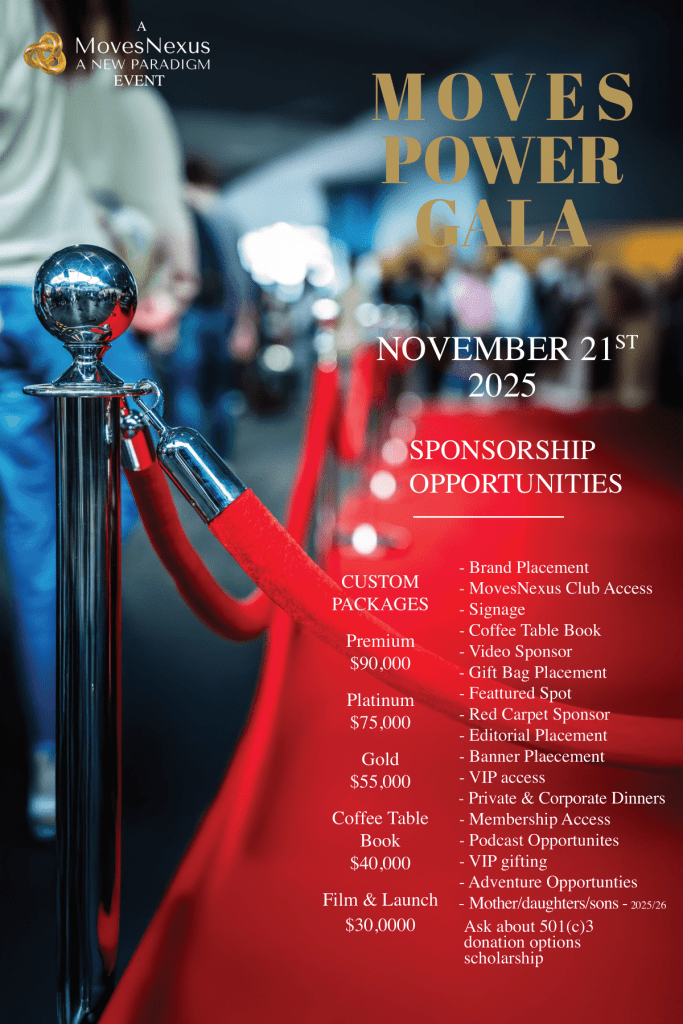
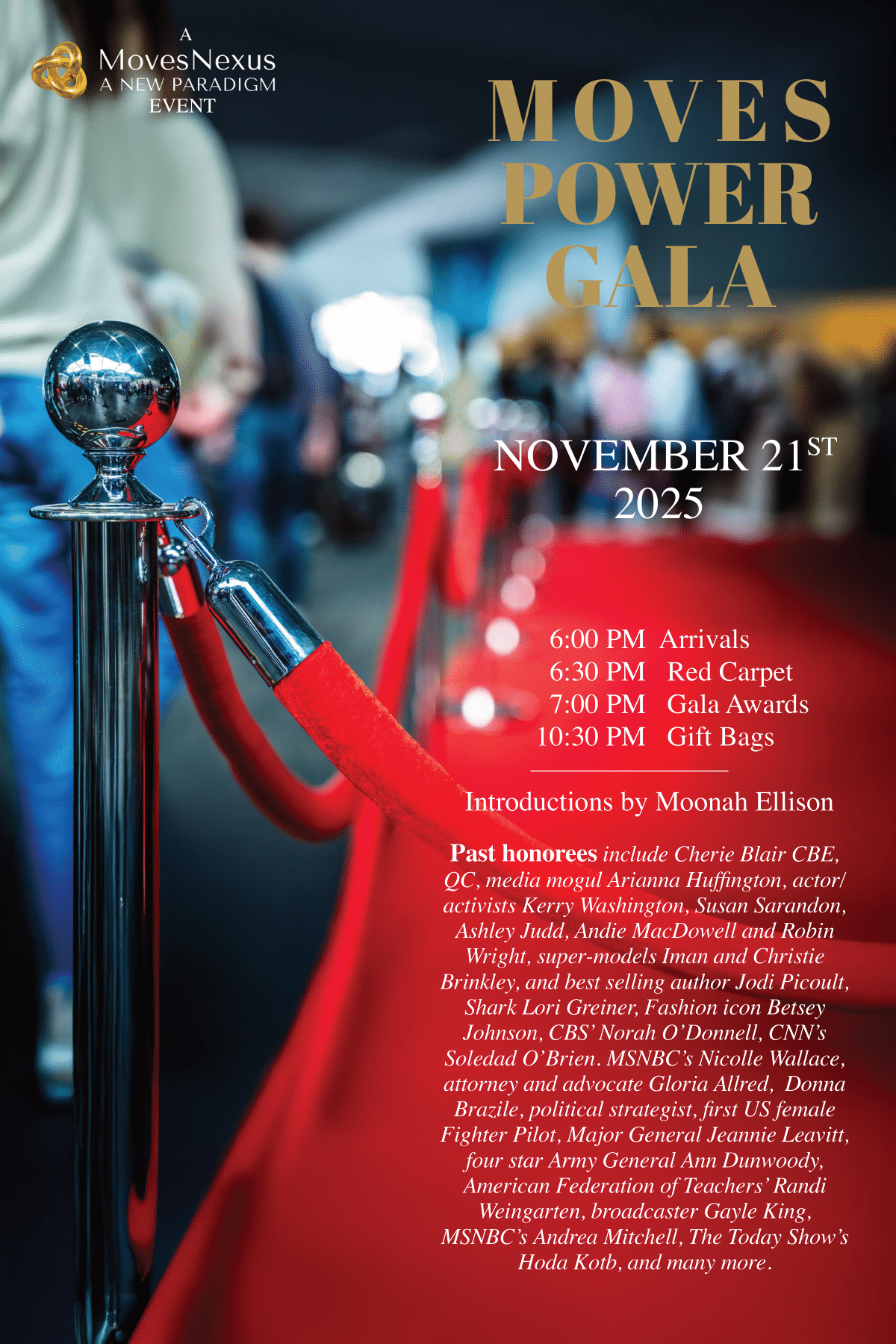
Table / Sponsorship Request Access
For additonal inforamtion send an email to pw25_awardsgala@newyorkmoves.net
or to request code over the phone 646.489.1633
Check Spam for code
“True leadership requires building the right team, delegating, and creating space for others to grow.”
Your journey has been really interesting. You’re a doctor—how did you go from chemistry to the wine industry?
I am a doctor in chemistry. I graduated in chemistry because I didn’t think I really wanted to join the family business. Pallini is family-owned and we just celebrated 150 years in May. My father was president and CEO, but he never encouraged me to join—not because I was a woman, but because he thought the environment in Italy, especially Rome, wasn’t ideal. Rome feels like the edge of the empire now, and working here is complicated with rules and regulations. He thought it was not a good atmosphere for a son or daughter to work in. With five generations of family politics, I was never pushed to consider it as a first option. I loved science, so I studied chemistry, and I loved university. I even accepted a PhD and did research between Rome and Newcastle in England.
Newcastle was tough at first—I didn’t even understand the Geordie accent! But it ended up being one of the greatest times of my life. I was even offered a postdoc afterward. But after ten years, I realized I didn’t want to spend my life only reading and researching. Around that time, my father was reformulating our limoncello recipe and asked me to help. I started part-time and discovered I really liked it. It was dynamic and exciting. From there, I did everything—production, formulas, procurement, even working as a promoter in supermarkets. That’s how I gradually stepped fully into the company.
It sounds like a very diverse path. What drew you to the business side?
I was never really set to work for someone else. Not in a rebellious way, but I liked having independence. My father was a very tough boss, old generation. I worked until the day before I delivered my first son and came back with him six weeks later. I had to juggle motherhood and leadership at the same time. It was tough, but it gave me resilience. I think women are natural multitaskers—something built into our DNA.
What qualities do you feel define a person with Power?
I don’t know if I would say I am powerful, though I was the first woman elected president of the Wine Spirits Association of Italy. In the past, women leaders often acted like men. True leadership requires building the right team, delegating, and creating space for others to grow. Women especially carry responsibilities outside of work—family, aging parents, children—so we are always balancing. To lead effectively, you have to organize, empower others, and sometimes allow them to fail, just as you would your children. That’s how growth happens. You also need courage to work with people who are better than you in certain areas. That’s real leadership.
With all the pressing issues in the world—gun violence, gender equality, child poverty—what do you think is the most urgent to address?
I think the biggest issue is the growing disparity between the very wealthy and those who can barely survive. It’s fueling fear and instability. Pay gaps between men and women are part of this too. Leaders of small companies can’t solve it all, but we can make changes where we are—ensuring equal pay, empowering women, creating stability. In Italy, for example, labor costs are very high—if I pay someone €1,500 a month, it costs me €3,000. This creates big challenges. But avoiding disparity is essential if we want a more balanced society.
What action do you think society can take to move forward in a better direction?
Equal opportunity between men and women is essential. We need to make women more financially independent, ensure fair pay, and support them in leadership. In Europe this is strongly encouraged, and I think it should be everywhere.
Have you faced a personal or professional challenge that shaped your path?
Of course. Personally, my challenge was guilt—feeling I wasn’t doing enough at home or at work. Many women know this feeling. Professionally, one of the toughest times was when my father stepped down. The board is all family members, and some didn’t want me to lead—especially the women. My father tried to mask it, but he stayed officially until he was 80 even though I was running the company. It was painful, but I proved myself. I created transparency with shareholders, built trust, and eventually gained full authority. Now they don’t question my decisions. That was a turning point.
Was there one defining moment that led you to where you are today?
It wasn’t one single moment, but the realization that I could succeed despite not having formal business training. I didn’t study finance or management, but I learned by doing. The success of bringing people together, creating strategy, and moving step by step built my confidence and showed me I could lead.
Let’s do some quick-fire questions. What trait of yours makes you most uncomfortable? And which trait do you value most?
I can be impatient and hot-tempered. When I’m stressed, I sometimes explode instead of handling things calmly. But I value my honesty. I’m very direct, and while it can be uncomfortable, it’s also a strength.
What is the most overrated virtue?
Smoothness or superficial charm. I prefer intellectual honesty.
What is your most unbreakable rule?
Honesty, especially in business. My family has always run the company with integrity, and I hold to that.
If you had to yell at someone quietly in your head, who would it be?
The head of our Italian national sales team!
What’s a big risk to you, and what’s a small one?
A big risk is anything that threatens the financial stability of my family or company—like a reckless acquisition. Small risks are experiments that don’t endanger the whole structure. In Italy, managers often rise later in life, which makes them more risk-averse. But I think taking calculated risks at the right time is essential.
What is the best piece of advice you’ve ever been given?
A saying in Italian: “Il meglio è nemico del bene”—The best is the enemy of the good. If you always chase perfection, you may never achieve anything.
Check Spam for code