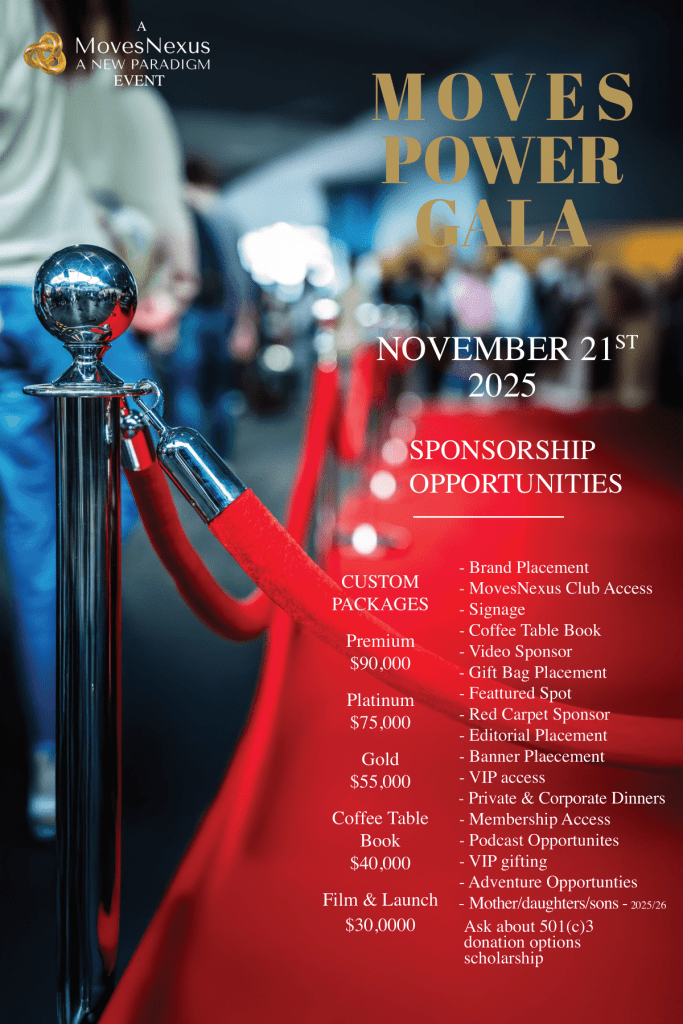
Table / Sponsorship Request Access
For additonal inforamtion send an email to pw25_awardsgala@newyorkmoves.net
or to request code over the phone 646.489.1633
Check Spam for code
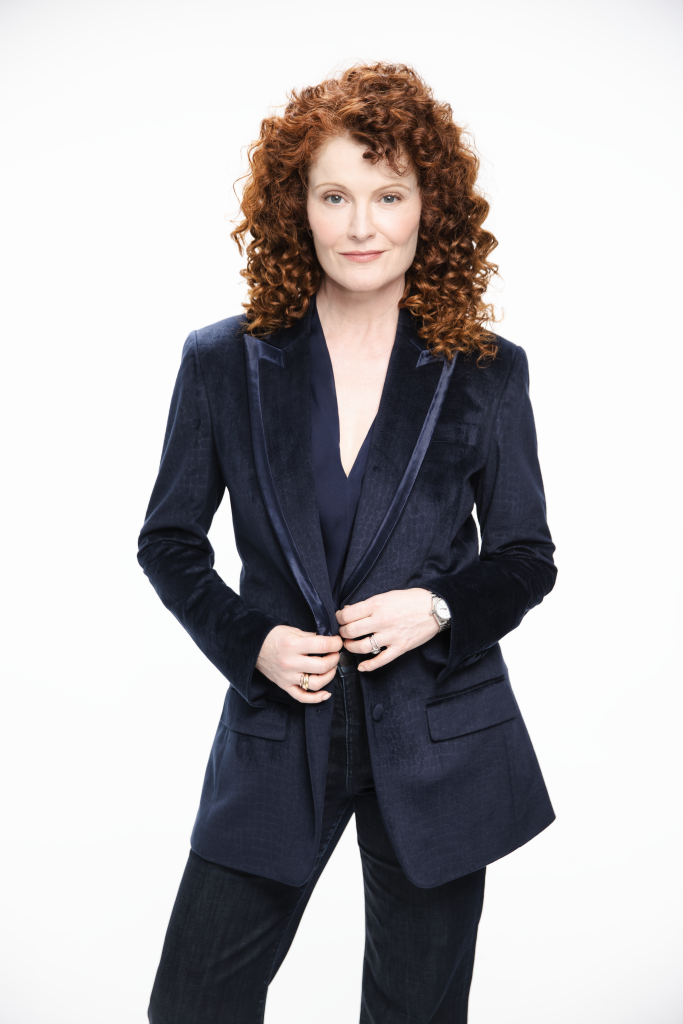
“As artists, we have a responsibility to create stories that make people feel seen, safe, and less alone.”
What are you working on right now?
There’s always something! I’m doing a bit of writing, and I just voiced a character in “The Twits,” the Roald Dahl adaptation Netflix is doing with Phil Johnson directing. That book was one of my childhood favorites, so it feels full-circle. I also just finished shooting a project I can’t quite talk about yet, and my husband and I are preparing to move from Los Angeles to New York. It’s a lot of chaos, but the good kind.
Why the move to New York?
I spent many years in New York doing theater, and my husband is a lighting designer for the stage. Our families are on the East Coast—mine in Pennsylvania, his in Boston—and we’re very lucky to have all four of our parents still with us. Plus, since “Ghosts” shoots in Montreal, the trek with two dogs is a lot easier from New York than LA.
Do you see yourself working behind the camera?
I love working with actors and mentoring young performers, but I don’t think directing is for me. Producing, however, speaks to my skill set—it combines creativity, organization, and connection. I was once a project manager for a corporate move consulting company, which was basically producing in another form. I enjoy bringing people together and making things happen.
What do you feel are the qualities of a person in Power?
Someone who doesn’t need permission to live and speak their truth. Power often gets a bad reputation because it implies dominance or control, but the kind of power I admire is self-possession—the ability to walk into any room and feel you belong there, and to use that comfort to lift others up.
What social issues do you feel are most pressing today?
I’m deeply alarmed by the marginalization of the LGBTQ+ community. During “Ghosts” season three, my character’s backstory involved suicide, so I did research to handle it responsibly. What I learned about the national mental health crisis—especially among youth—was heartbreaking. The Trevor Project recently reported alarming suicide rates, and this year the U.S. government defunded the 988 Lifeline option that connects LGBTQ+ callers to trained support. That’s a $25 million gap, and it’s costing lives.
As artists, we have a responsibility to create stories that make people feel seen, safe, and less alone.
How can society begin to change that?
We’re bombarded with bad news daily, and it’s desensitizing people. It’s easy to feel helpless. But we need more empathy, more connection, and more willingness to speak up. If I could sum it up: we just need to wake up—and stay awake.
Have you faced a challenge in your life that shaped who you are?
Yes. I’m an adopted person, and I haven’t spoken about that much because my feelings around it have been complicated. I was raised by a loving family who supported me completely, but I’ve struggled with identity and belonging my whole life.
I’m certain part of why I became an actor is that I was searching for understanding—trying to decode people’s motivations, especially those who gave me up. I’ve spent my career playing complex women, and in a way, I’ve been building a psychological mosaic of who my birth mother might have been.
It’s taken me years to realize my story doesn’t have to be about keeping someone else’s secret. I can own it now, and that’s incredibly freeing.
Was there a defining moment that led you to acting?
I was painfully shy as a kid—like hide-behind-my-mother’s-leg shy. Then one day, my mom took me to see a community theater production, and I fell in love. I started acting there and found my people. Theater gave me what I didn’t know I was craving: community, purpose, and a place where I could be seen. I was also an only child, so that sense of ensemble became my chosen family.
What’s the best piece of advice you’ve ever been given?
Follow your joy and go with your gut. It sounds simple, but learning to truly hear your inner voice takes time. I’ve spent much of my life second-guessing myself. Saying “yes” more often—especially when something scares me—has opened doors I never expected.
What’s your unbreakable rule in life?
Be kind. Always. It costs nothing. On set, I make a point to welcome new people as if they’re guests in my home. I was a guest star for many years before I had a steady series, and it’s intimidating to walk into someone else’s established rhythm. A little warmth goes a long way.
Who do you yell at quietly in your head when you’re upset?
Myself! I’m working on that.
What do you consider a big risk—and a small one?
Living your truth is the biggest risk—and the most essential one. I always think of that Mary Oliver line: “Tell me, what is it you plan to do with your one wild and precious life?” It makes me tear up every time. The risk is daring to answer that question honestly.
What is your biggest fear?
Rejection. But I’ve learned that fear doesn’t have to define you. It’s okay to fall down, be embarrassed, be rejected—it’s all part of being human. The important thing is to know that you have a home in your own heart, and to build a chosen family that reminds you of that.
If you could have any animal or pet, what would it be?
I’m a big rescue dog person! I have two sleeping beside me right now. I believe animals have healing powers—they ground us and teach us empathy. I’d love to have a small farm someday, maybe by a lake, filled with animals. My husband and I have joked about turning it into a dog rescue or emotional-support training space.
What’s next for you?
I’m learning to embrace the unknown. Whether it’s producing, writing, or building a life surrounded by animals and art, I want to live more boldly and say yes more often.
Check Spam for code