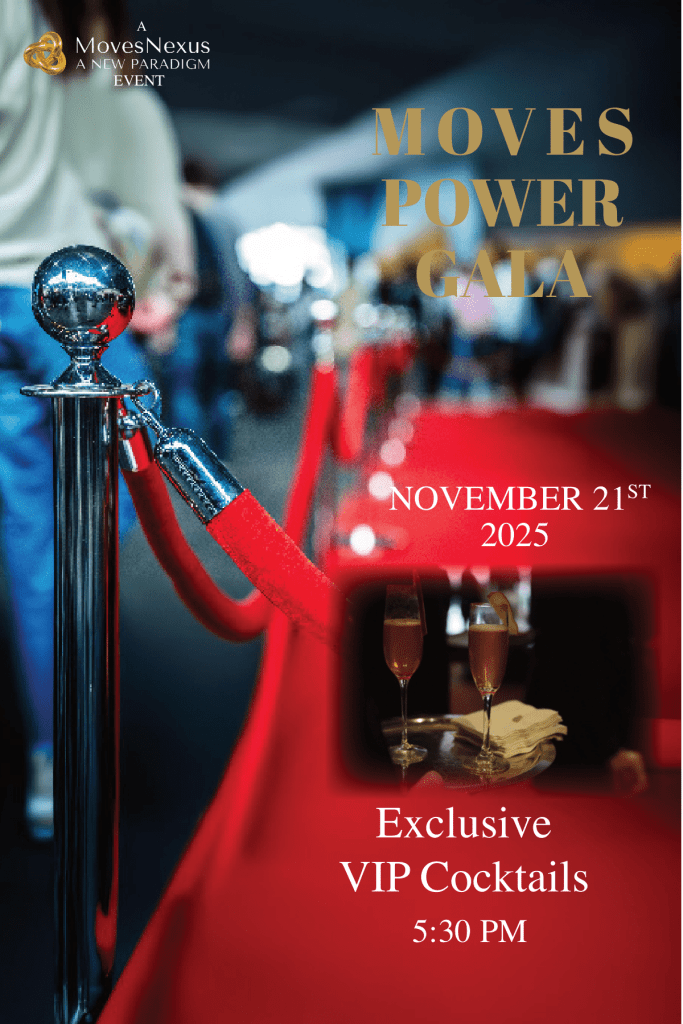
Table / Sponsorship Request Access
For additonal inforamtion send an email to pw25_awardsgala@newyorkmoves.net
or to request code over the phone 646.489.1633
Check Spam for code
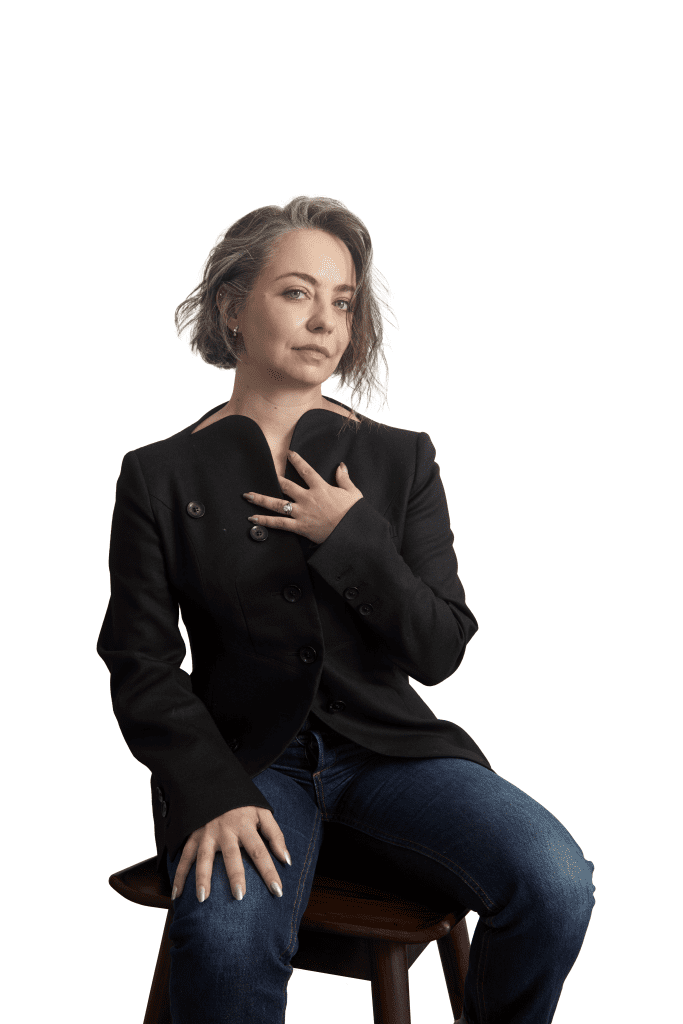
“We need to go back to relying on facts, and having both intellectual curiosity and honesty. If we start from a place of fact and logic, then it’s much easier to engage on the tough topics.”
What qualities make a “Power Woman”?
When I think about a Power Woman, there are three traits that I think are critical and that I see in the women I most want to emulate.
Authenticity. Being able to show up fully as yourself is a superpower, because it makes you feel powerful. It’s very hard to hold power if you’re not being authentic.
Grit. A Power Woman isn’t just great when times are good. She finds what she needs within herself to push through and lead through difficult situations.
Purpose. We’re all more powerful when we have a purpose or mission behind our work, so a power woman has a driving force and a set of values behind what she chooses to spend her time on.
With all the different issues one could focus on (e.g. gun violence, gender equality, child
poverty etc.), which do you think is the most pressing in today’s world?
It’s incredibly hard to make progress on any issue when people don’t agree on what the issue is, or how to tackle it.
With that in mind, I think it’s table stakes in today’s world to figure out a way to find common ground. In business, the easiest way to do that is through facts and data. We need to go back to relying on facts, and having both intellectual curiosity and honesty. If we start from a place of fact and logic, then it’s much easier to engage on the tough topics.
What do you think is the number one action we as a society can take toward empowering
women?
The number one thing we can do is to accept and see people for who they really are. If we can truly see people for what they bring to the table, we will have taken a big step toward not just empowering women but all individuals needing empowerment.
Do you think that asking previous salary requirements in job interviews contributes to the pay gap between women and men? Should we push for a nationwide ban?
Any number given in any setting has the potential to anchor someone’s thinking, so asking previous salary requirements will certainly influence any resulting offer. I don’t believe in solving this issue through legislation, but rather through training leaders and talent professionals in better ways to assess potential candidates and their overall value.
Do you think that a pay gap still exists between women and men? If so, how could we equalize it?
Pay gaps exist not due to discrimination in pay practices, but more because women typically do not pursue career changes and promotions with the same frequency and fervor as men. To achieve pay parity, we need to ensure women feel empowered to understand their worth and seek out opportunities to maximize their overall career opportunities.
What can we do to continue to support and enhance the growth and presence of women in high profile positions?
Women already in high profile positions have a job to do: they need to make themselves even more visible. It’s much easier to achieve success if you visualize it, and it is hard to visualize something that you don’t regularly see. We need women in powerful positions to be visible so that others with ambition have a real, tangible role model to visualize.
What was a defining moment or experience in your life that led you to where you are today?
Getting fired. I was working for a very small, family-owned business and got fired unexpectedly. When I reflected on it, and understood why I got fired, I realized that I had misread how to deliver tough feedback to the family who owned the business—and it came from a lack of real training in how to navigate organizational dynamics and politics.
While upsetting, it was the push I needed to prep for the GMAT and go to business school. I ended up spending two years getting my MBA at MIT, and what I learned there set me on a completely different trajectory in my life and my career… and I’m sure I wouldn’t have set on this path without having that pivotal setback.
What changes have you seen in the political landscape for women over the past few years?
I prefer to focus on long-term achievements rather than any short-term setbacks. If we look at the past 100 years, women have achieved enormous milestones professionally and personally. No one’s journey—and no group’s journey—is without challenges, obstacles and setbacks, so it is more useful to track progress and move forward, and I remain optimistic to see how current and future women leaders help us continue this success.
Do you think there is a pressure for women to receive higher education (e.g. master’s and PhDs) to receive a similar salary to their male counterparts? Should higher education be prioritized over work experience or a mix of both?
It is my opinion that the pressure for women to receive higher education is entirely self-induced. Studies have shown that women typically want to ensure they fulfill 100% of job requirements when applying to roles, which pushes us to make sure we have a long list of credentials and degrees to draw from. Men statistically don’t feel the need to check all the boxes when they’re raising their hand for an opportunity, so they likely don’t feel this same pressure to rack up the qualifications.
All of that said, why not leverage these degrees to get ahead? Master’s degrees and PhDs open up extraordinary opportunities for networking and creating a wide set of connections, which can be incredibly helpful in career building and business success.
If you could have someone else’s job for a day, who and what would it be? Why?
I’d like Rene Redzepi’s job as chef and owner of Noma restaurant in Copenhagen. I’d be terrible at the job, but it would be an absolute dream to get to work with the team he has built, and collaborate on all the things that make that restaurant run. To do R&D on unique local ingredients and new cooking techniques. To hang out in the fermentation lab conducting wild experiments. To get to watch the gorgeous ballet of service unfold at night and have the satisfaction of watching a full room of diners experience one of the culinary wonders of the world must be such a thrill.
What is the best piece of advice you’ve been given?
There is no career fairy coming to grant your wish! You need to be your own advocate.
What is your favorite book? Why?
I find myself repeatedly going back to The Count of Monte Cristo by Alexandre Dumas. While I would never condone the level of anger and revenge that Edmond Dantes has in the book, I find it to be a thrilling story with beautiful character development and a unique ability to plant the reader in a totally foreign time, place, and mindset. It’s also one of the rare books to have a fantastic movie adaptation.
What do you value most about your friends?
I’m an introvert, so I don’t have a lot of friends… but the ones I do have are the ride-or-die type of friends. What I value most about them is that we all live in different parts of the world and do very different things with our days, but we still are each other’s best cheerleaders. It doesn’t matter if we haven’t talked in three days or three years; when we pick back up, it’s right where we left off, and it’s exactly what we all need.
Which trait of yours makes you most uncomfortable? And, which trait of yours is your favorite? Why?
I’ve always had a bit of a rebellious streak, which shows up in different ways. I dressed wild in high school, I’ve had pink hair (and purple, and blue), I make a lot of bold interior design choices in my house, and I have more piercings and tattoos than you’d expect a C-suite executive to have. Since I decided to pursue a more corporate career, this rebellious streak has made me uncomfortable. I occasionally worry that I’m “too much” or that I won’t fit in.
The fun thing about that rebellious streak is I’ve learned to absolutely embrace it. Being the only person who looks, thinks, and acts like me has become a superpower because I feel powerful when I feel comfortable in my skin. It also has an impact on my team: those on my team feel empowered to be themselves, and I’m reaching a wider net of potential talent because people see they don’t have to ‘fit in’ on my team.
What do you consider the most overrated virtue?
Being extroverted! Our entire society rewards extroverts and says being introverted is bad. But that means we’re discounting an entire subset of our population who are statistically more creative, empathetic, resilient, and independent. Those all sound like great leadership traits to me.

Check Spam for code