2025

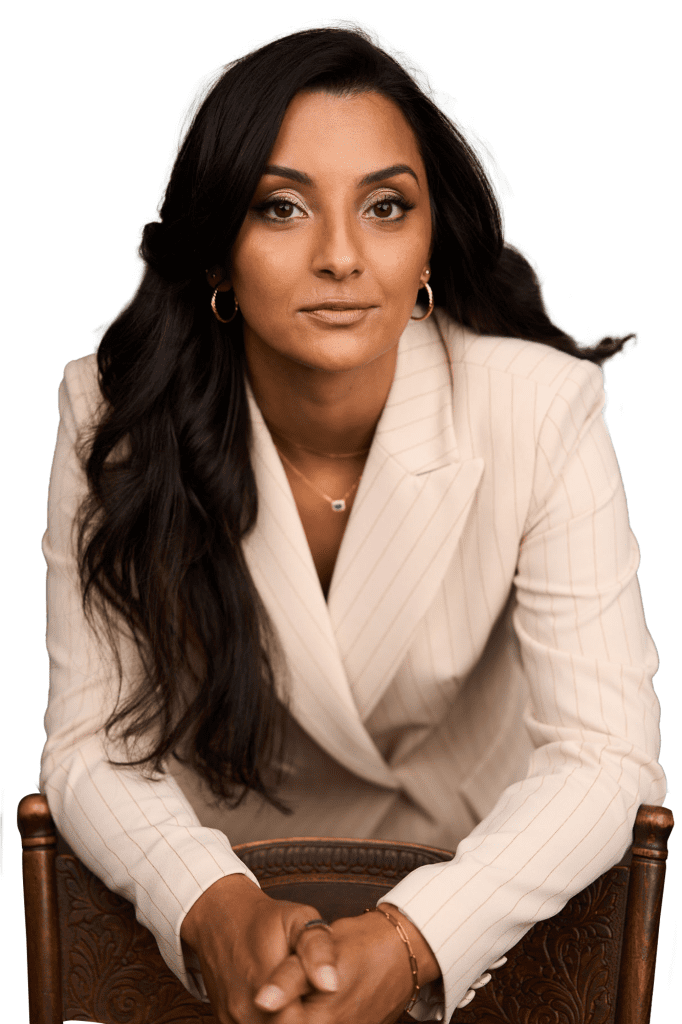
Zainab Azizi

Producer, President of Raimi Productions, Send Help (2026)

“Earning respect as a woman in this business has been a challenge—but it’s also been my biggest motivator.”

Have you always wanted to work in film?

I’ve always loved it. As a kid, I was obsessed with storytelling—I’d draw comics, get lost in books, and beg my parents to take me to Blockbuster every Friday night. Growing up in suburban Maryland, I never imagined film could be a real career. No one around me worked in the industry, and at the time, the University of Maryland didn’t even have a film program. My parents, being Afghan, encouraged me to become a doctor or lawyer. But I loved people—I loved studying them. So I majored in sociology, started working in PR and branding, and eventually moved to Los Angeles. That’s when everything changed.

How did your career in film begin?

Completely by chance. I was job hunting and got a call for an assistant position at CAA. I had no idea what CAA was at the time! I stayed up all night researching, and even though I didn’t get that job, it opened my eyes. I started applying everywhere and eventually landed in the mailroom at William Morris Endeavor. That was the beginning of everything.

What was that experience like?

Honestly? Humbling. The mailroom was in the basement—no windows, just a cart full of envelopes. But as I delivered mail from floor to floor, I’d watch agents negotiating with filmmakers, assistants juggling calls—it was electric. That was when I thought, I’m in the center of it all. I’m going to learn everything I can and never leave.

What qualities define a powerful person to you?

Optimism, presence, and collaboration. Filmmaking takes a village: directors, writers, crew, executives, hundreds of people working toward a shared vision. The best leaders know how to collaborate and make everyone feel seen.

What global issue feels most personal to you?

Women’s rights, especially in Afghanistan. Reading about women being banned from education, books by female authors being outlawed. It’s devastating. It hits close to home because that could have been me. I’m incredibly grateful to have been born in the U.S., but that doesn’t dull the ache of knowing what Afghan women are facing right now.

Have you ever faced a challenge that shaped who you are?

Being a young woman in Hollywood isn’t easy. You have to work twice as hard to be taken seriously. I’ve been lucky to have incredible mentors who believed in me, but not everyone gets that. Earning respect as a woman in this business has been a challenge, but it’s also been my biggest motivator.

Do you think the industry is changing for women?

Absolutely. I see it every day. More women are running production companies, producing their own films, creating stories centered on female experiences. Friends I started with in the mailroom are now executives and producers. Twenty years ago, that would’ve been rare. There’s a long way to go, but we’re moving in the right direction.

Was there a defining moment in your career?

My first day in the mailroom, definitely. But also later, after working with me on a project, Sam Raimi told me, “You’re a producer.” That changed everything. It made me see myself differently.

What was the first film you produced?

Umma, starring Sandra Oh. It’s a supernatural thriller [Umma, 2022] about a single mother raising her daughter on a remote farm, but at its core, it’s about heritage, identity, and mental health. It explores what it means to be first or second generation, and how culture shapes you. I saw so much of myself in it—the child of Afghan immigrants, figuring out how to belong in two worlds.

What did that film teach you?

That representation matters. When my director told me she’d never seen a film in theaters where the cast looked like her, it stuck with me. Producing allows me to help change that—to put stories onscreen that make someone, somewhere, feel seen. Even if it’s just one person, it’s worth it.

What’s one personal trait you’re working on?

I’m an overachiever—I try to do everything at once. It’s a blessing and a curse. Sometimes you have to remind yourself to pause and breathe.

And what trait do you love most about yourself?

I genuinely love people. I like learning about them, connecting, asking questions. Whether I’m on set or in an office, I want to know how people are really doing. It’s about community.

What’s your unbreakable rule?

Trust. It’s the foundation of any partnership, creative or personal. Once it’s broken, it’s hard to rebuild.

Who do you yell at quietly in your head when you’re upset?

Myself! Always myself.

How do you measure risk?

By how much it scares you. If it terrifies you, it’s probably a big one—and it’s probably worth taking.

What’s the best piece of advice you’ve received?

Nothing great comes easy. It’s simple but true. The most meaningful things in my life have been the hardest to achieve.

What’s been the most challenging experience of your career?

Producing my first film during COVID. We were about to start pre-production when the shutdown hit. Restarting safely, testing constantly—it was chaos. But it taught me resilience and adaptability.

How do you feel about AI’s growing role in entertainment?

Honestly, I’m cautious. I value human creativity too much to hand storytelling over to algorithms. That said, I’m keeping an open mind. It’s the future—we just need strong safeguards to protect artists and authenticity.

What’s next for you?

Finishing my new film—it’s in post-production now, with Rachel McAdams and music by Danny Elfman. I’ve seen it at least fifty times during editing, and I’m still not tired of it. That’s how I know I love what I do.

Table / Sponsorship Request Access

For additonal inforamtion send an email to pw25_awardsgala@newyorkmoves.net or to request code over the phone 646.489.1633 

Check Spam for code

For additonal inforamtion send an email to pw25_awardsgala@newyorkmoves.net or call 212.396.2394 or 646.489.1633 (also text for rapid response)