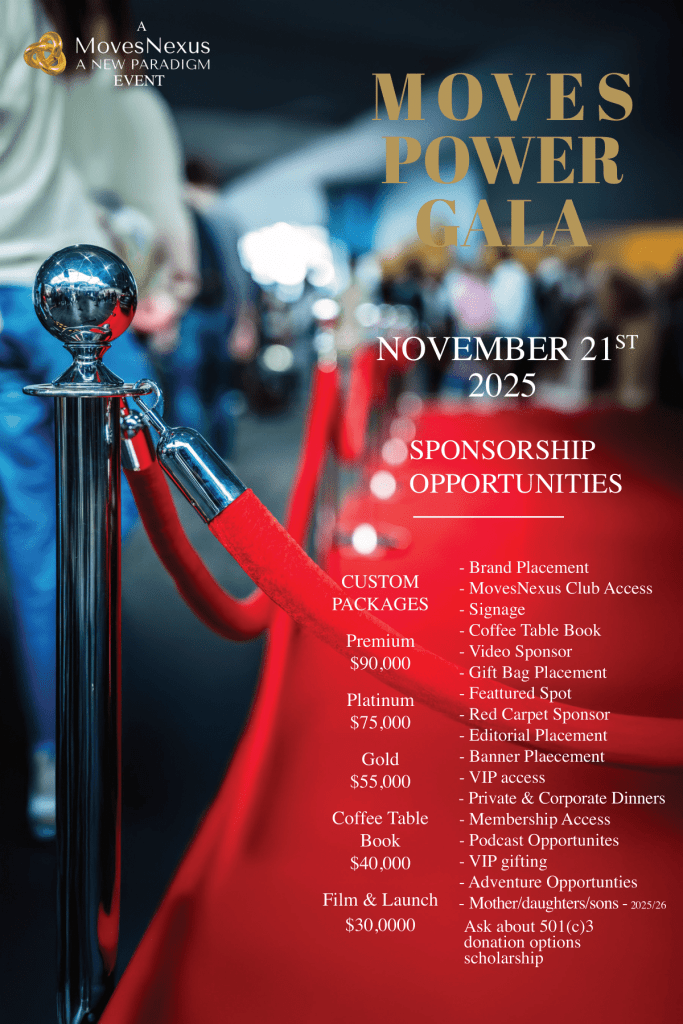
Table / Sponsorship Request Access
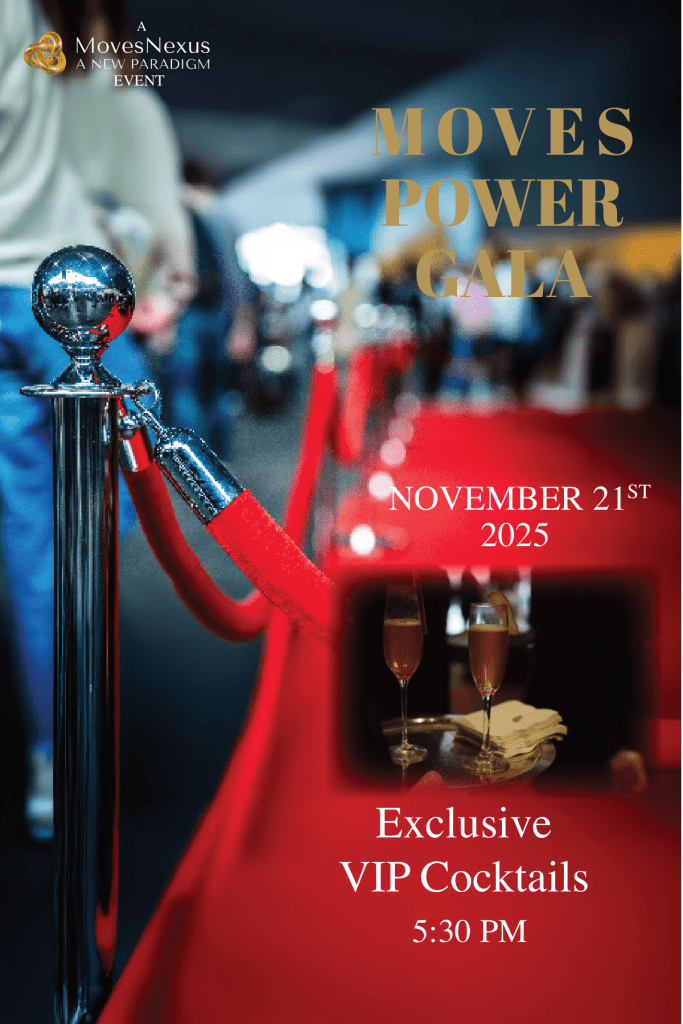
For additonal inforamtion send an email to pw25_awardsgala@newyorkmoves.net
or to request code over the phone 646.489.1633
Check Spam for code
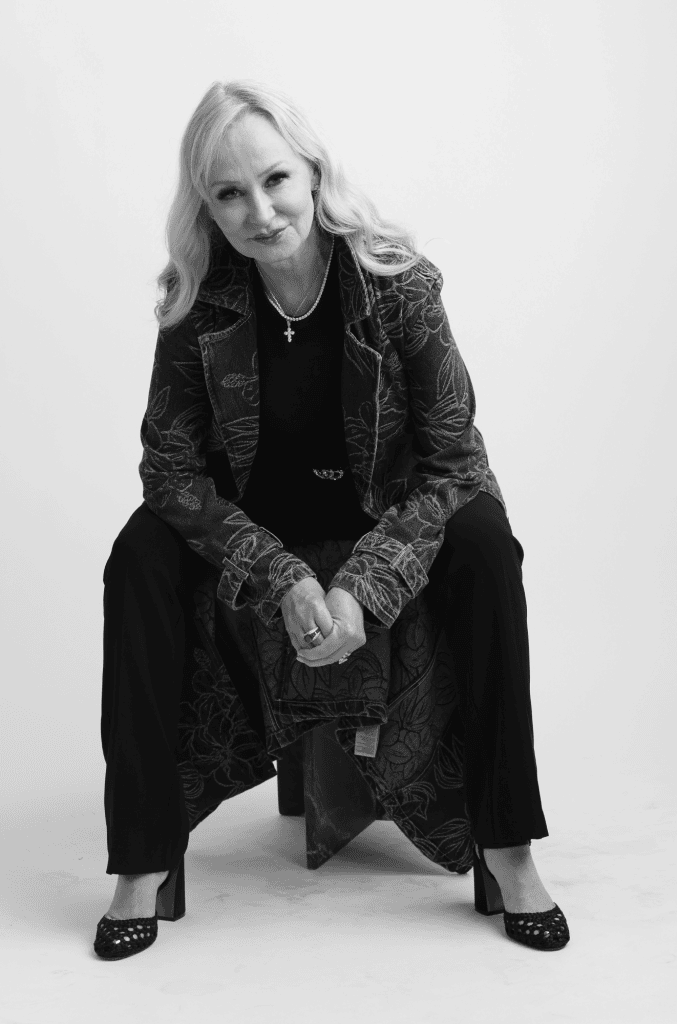
“I hope the next generation of women grows up knowing that they deserve a seat at the table—and that they are allowed to take it. The meaningful change will be cultural as much as institutional: women owning their power, and the people around them making room for it without requiring them to become someone else first.”
What do you feel has impacted you in the last 20 years? Be broad and inclusive of the world around you.
Over the last 20 years, I have been most shaped by a personal health crisis that changed how I see everything else. Nearly losing my life while giving birth to my son Declan, and taking more than two years to regain my health, changed my sense of gratitude, faith, and perspective. It taught me how quickly life can change—and how much we rely on the people who show up for us.
That experience influenced how I approached everything that followed: raising four children while building a career, earning my CPA, and accepting that discipline and ambition do not eliminate the need for help. Leaving my long-term career at Verizon and ending my marriage at roughly the same time forced me to draw on strength I was not sure I had. It also led to new opportunities, to my current husband, Eric, and to a remarkable village of women who stood beside me.
My work then broadened that perspective. In telecom and digital infrastructure, I saw how technology can shape communities and expand opportunity. At SubCom, I saw how a single undersea cable could improve the economics and culture of a country almost overnight. It reminded me that infrastructure is never just infrastructure—it determines who can access information and participate in the world around them.
Taken together, these experiences have made me more grateful, more aware of the human side of progress, and less interested in separating life into neat categories. Technology, faith, family, health, work, and relationships all shape one another. And the older I get, the more convinced I am that systems matter—but people are always at the heart of them.
Looking ahead, what meaningful change do you hope to see for women in the next 20 years?
I hope we stop celebrating women primarily for surviving impossible conditions and start changing the conditions themselves.
More women in leadership is important, but representation alone is not enough. I want to see work designed around the reality that people have families, health needs, caregiving responsibilities, and lives outside the office. I want caregiving to stop being treated as a penalty, and I want women’s health to receive the same seriousness, investment, and research attention as every other area of health.
I also hope women are given access to capital, sponsorship, credibility, and second chances in a more equitable way. A woman should not have to choose between being deeply present for her family and being taken seriously as a leader. She should not have to apologize for ambition, toughness, warmth, age, or change.
Most of all, I hope the next generation of women grows up knowing that they deserve a seat at the table—and that they are allowed to take it. The meaningful change will be cultural as much as institutional: women owning their power, and the people around them making room for it without requiring them to become someone else first.
If you could have any superpower—real or imagined—what would it be and why?
I would choose the ability to give people clarity—and perhaps a little more time.
Not more time to become busier, but enough space to see what matters, what can be delegated, and what does not deserve as much fear as it has been given. So much of life becomes difficult when people feel rushed, unseen, or unsure of where to turn. I would want to help people see a way forward and remember that they belong.
It would be useful in a boardroom, but probably even more useful at a kitchen table.
If you could step into anyone’s role or profession for a day, whose would it be—and what draws you to it?
If I could borrow a profession for a day, I would go back to the physical side of telecom—as an undersea-cable engineer or repair specialist.
You can take the woman out of infrastructure, but you cannot quite take the infrastructure out of the woman. My time around telecom and digital infrastructure taught me that the most important systems are often the ones people never see. I would love to be on the technical and operational side for a day—to understand the physical work of connecting communities and to see, up close, how something buried beneath the ocean can change a country’s economics, culture, and access to opportunity.
It is a very different role from finance, but it would let me see the part of the story I have spent much of my career helping support.
If you could offer one piece of advice to your 15-year-old self, what would you say—and why?
You do not have to earn your right to belong. You can work hard, keep your standards, and pursue big goals without constantly proving that you deserve to be in the room. Ask for help sooner. Let people love you and support you. And remember that being strong does not mean doing everything alone.
It took me a long time—and some fairly dramatic life experiences—to understand that a village is not evidence of weakness. It is one of the reasons any of us gets as far as we do.
And take the seat when it is offered. Actually, do not wait for it to be offered.
What’s one thing you can share with us that no one—or very few people—know about you?
One thing people may not know about me is that I hold the title of lead inventor on a Verizon wireless-switching patent.
Throughout my career, I worked hard to understand the technology so I could be a better finance business partner. I love the “plumbing” of business and getting my hands a little dirty. Most people know me through finance and executive leadership, but my career also included getting close to the technology itself and helping develop intellectual property. I like that the patent represents a less visible part of my story: I have always been curious about the systems underneath the business—not just the numbers they produce.
What’s one thing trending on your social feed right now that’s caught your attention, or a binge?
Right now, Eric and I are obsessed with Vita Mahjong. We spend an embarrassingly satisfying amount of time clearing those tiles and competing with strangers—or possibly AI. Who knows?
It is simple, a little addictive, and just competitive enough to make us both care far more than we probably should. There is something wonderfully low-stakes about ending the day by trying to beat each other, clear the board, and claim bragging rights over a game played on our phones.
What’s the last thing that genuinely made you laugh out loud—and what was it about it that struck you as funny?
The last thing that genuinely made me laugh out loud was lunch with Eric, my mom, and my stepdad, Bob. Bob told us that he had been making real progress in mastering “A1.”
We asked him to say more, and he pulled up a series of photos he had altered using some kind of digital photo-editing tool. “Bob, do you mean AI?” I asked.
He was completely serious, which made it even funnier. We could not stop laughing—and it was also incredibly sweet. “Mastering A1,” or “A. One,” has now become a family joke.
Check Spam for code