2026

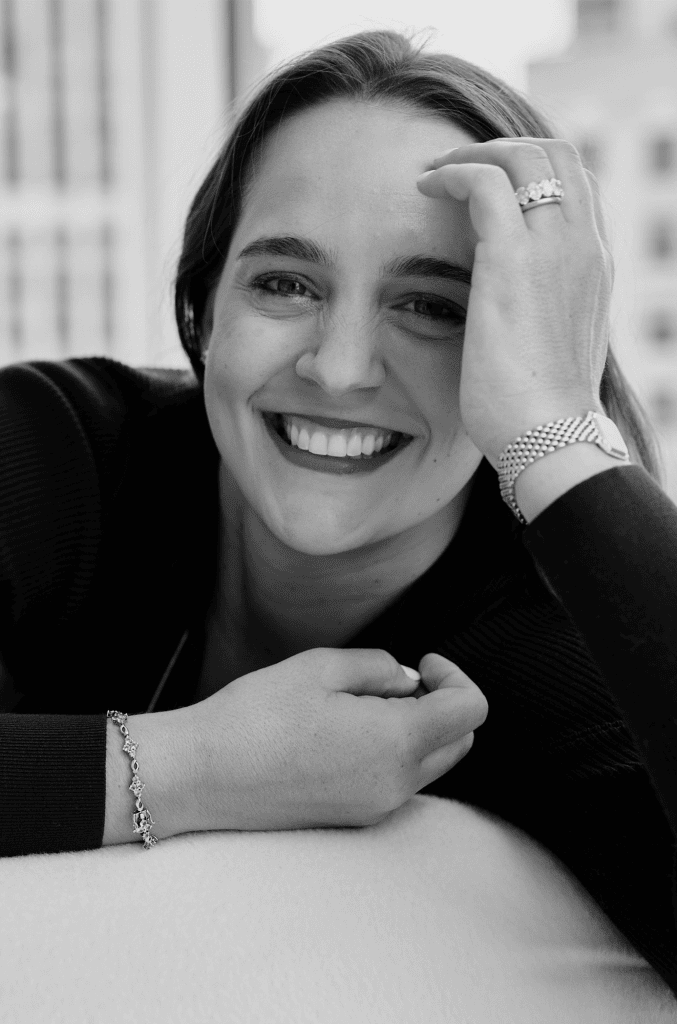
Cristina Mommsen

Managing Director, The Consello Group

“Leaders have a responsibility to make sure people evolve alongside the technology through education, retraining, and mentorship. We can’t allow the human side of careers and organizations to disappear.”

What qualities define true power in leadership today?

Leadership today isn’t about control or hard authority. It’s about trust, judgment, and the ability to create clarity amid uncertainty. Earlier in my career, I thought leadership meant having all the answers, being the first to speak, or being the loudest person in the room. Over time, I’ve learned almost the opposite. The best leaders are often the best listeners. They ask thoughtful questions, bring out the best in the people around them, and establish trust through their judgment and experience. Especially during periods of technological change, that human trust becomes even more important.

What global issue can leaders no longer afford to ignore?

AI and, specifically, how we preserve human opportunity and human connection alongside it. Technology can increase productivity, expand access to information, and unlock tremendous innovation, but it doesn’t automatically create social progress. I’m already seeing younger employees turn first to technology rather than walking into someone’s office, asking questions, learning from experience, and developing their own critical-thinking skills. Leaders have a responsibility to make sure people evolve alongside the technology through education, retraining, and mentorship. We can’t allow the human side of careers and organizations to disappear.

Can you share a challenge or risk that became a turning point in your professional journey?

I’ve been very fortunate, so I don’t necessarily define my experiences as setbacks. But I’ve consistently chosen uncertain paths rather than the comfortable or obvious ones. In 2013, I joined a first-time private equity fund that was relatively unknown, and that decision gave me an extraordinary level of experience at a young age. Later, I took another significant risk by helping build Cancelo Capital from scratch. Building a private equity firm is difficult on its own, and we were also trying to create a differentiated model that worked alongside a much larger advisory platform. Those experiences reinforced something I strongly believe: growth very rarely happens when everything feels secure.

I’ve often asked myself a question inspired by investor Graham Weaver: What would you do if you knew you couldn’t fail?I’m fortunate to have had the ability to take those risks, and I don’t take that privilege for granted. But whenever I’m mentoring someone, my advice is consistent: bet on yourself. Outcomes are never guaranteed, but you build tremendous faith in yourself by making those decisions.

What moment in your life most shaped you as an executive and changemaker?

There are two experiences that come to mind. When I was 17, I was in a car accident and sustained a significant head injury. I had to step away from school, repeat a year, and change schools. At that age, when you’re so focused on achievement, schedules, and the plans you’ve created for yourself, having everything suddenly stop feels devastating. It taught me very early that life isn’t linear—and it doesn’t need to be.

That experience also gave me a lasting awareness that everyone is carrying something. Before we’re CEOs, investors, board members, or anything else, we’re human beings. That’s why understanding what motivates someone and getting to know who they actually are can matter far more than understanding their résumé.

The second experience was navigating COVID as an investor and board member. Businesses were shutting their doors and furloughing thousands of people almost overnight. We had fiduciary responsibilities, but there was also an enormous human responsibility to protect people while executives and employees were losing family members and experiencing things none of us could have anticipated. It reinforced that humanity has to remain at the center of leadership.

What personal trait has been your greatest challenge to master, and how has it become a strength?

Pessimism—or perhaps more accurately, learning how to think about risk without expecting failure. Investing naturally trains you to identify everything that could go wrong. Earlier in my career, that sometimes meant focusing heavily on downside scenarios.

The shift for me was learning to distinguish between identifying risk and expecting failure. They’re not the same thing. Instead of simply asking, What if this fails?, I learned to ask, What’s the worst that could happen? Most of the time, the answer is something manageable. That allows you to retain the rigor of analyzing risk while creating confidence and optimism within a team. Something that once felt like a challenge has become a strength because I’ve learned how to reframe it.

What principle or non-negotiable rule do you live by?

Integrity. One of my mentors told me that your reputation compounds like capital. Trust can take an entire career to build and only a moment to lose. Credibility and integrity matter far more than any short-term gain. Whether the temptation is convenience, money, or returns, you can’t compromise your integrity. You have to make the right decisions for the right reasons.

What’s one of your biggest fears?

Looking back and realizing I wasn’t present enough in the life I was working so hard to build. I’m at an incredibly busy point in my life—I’m a mother of two daughters under two, I have my husband and family, and I have a career that matters deeply to me. But time is fleeting.

Career matters. Family matters. Health matters. And no title can replace your health or your relationships. My husband is my partner in every sense, and I want to be present with him and with my daughters. Sitting here with a seven-week-old and an almost two-year-old, that’s especially top of mind.

What’s the best advice you’ve ever received?

Personally, choose your partner very wisely. It’s one of the most important decisions you’ll ever make because the person you build your life with affects virtually everything. I feel like I won the lottery with my husband.

Professionally, it’s to pay it forward. I’ve been given an extraordinary number of opportunities and gifts throughout my life and career, and I feel a responsibility to do something with them for other people. There’s a finite amount of time in this life, so one of the questions that’s constantly on my mind is whether I’m paying it forward enough and how I can do that more meaningfully.

What’s a must-read for you?

When Women Lead by Julia Boorstin. The book profiles highly successful female CEOs and founders and explores how women can succeed not by mimicking traditional models of leadership, but by leaning into strengths that historically haven’t always been valued—empathy, adaptability, collaboration, team-building, and resilience.

I’ve been fortunate to learn from and work alongside incredible women, and I see so much of what the book describes in them every day. At Cancelo, roughly 60% of the deals we’ve done have been with female founders, which I’m incredibly proud of. The book challenges the idea that leadership has to mean command-and-control management and opens up an entirely different set of possibilities for what effective leadership can look like.

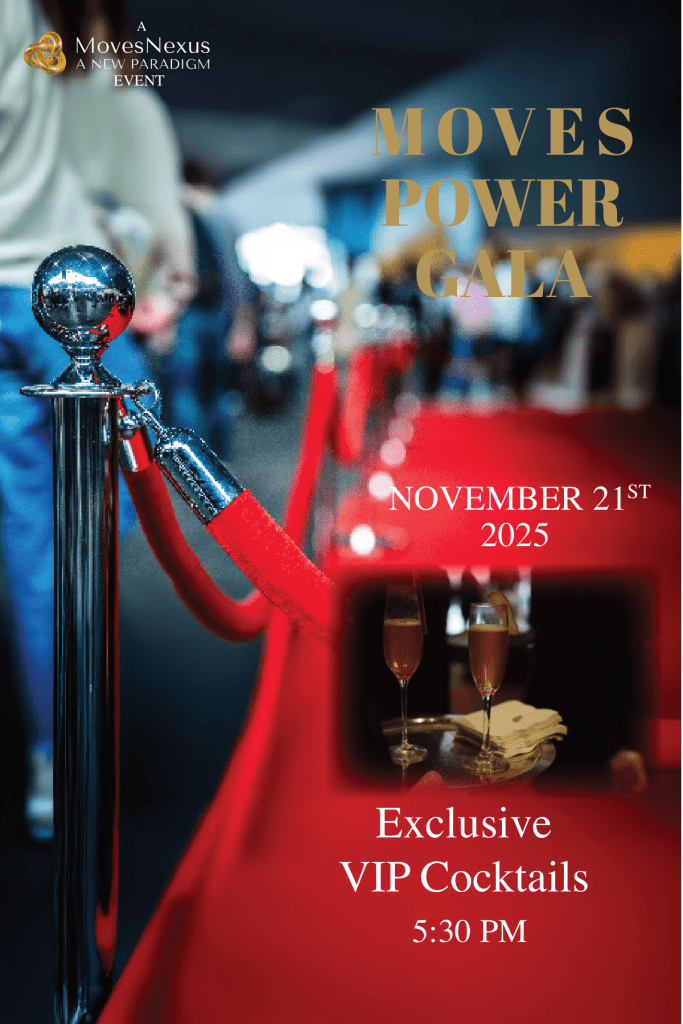
Table / Sponsorship Request Access

For additonal inforamtion send an email to pw25_awardsgala@newyorkmoves.net or to request code over the phone 646.489.1633 

Check Spam for code

For additonal inforamtion send an email to pw25_awardsgala@newyorkmoves.net or call 212.396.2394 or 646.489.1633 (also text for rapid response)