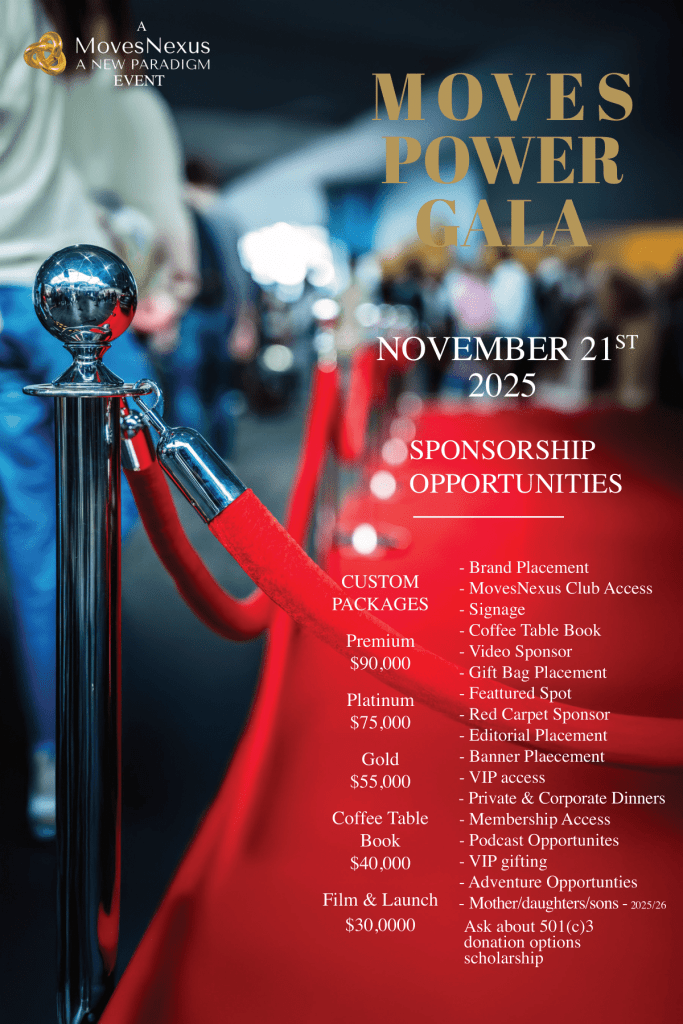
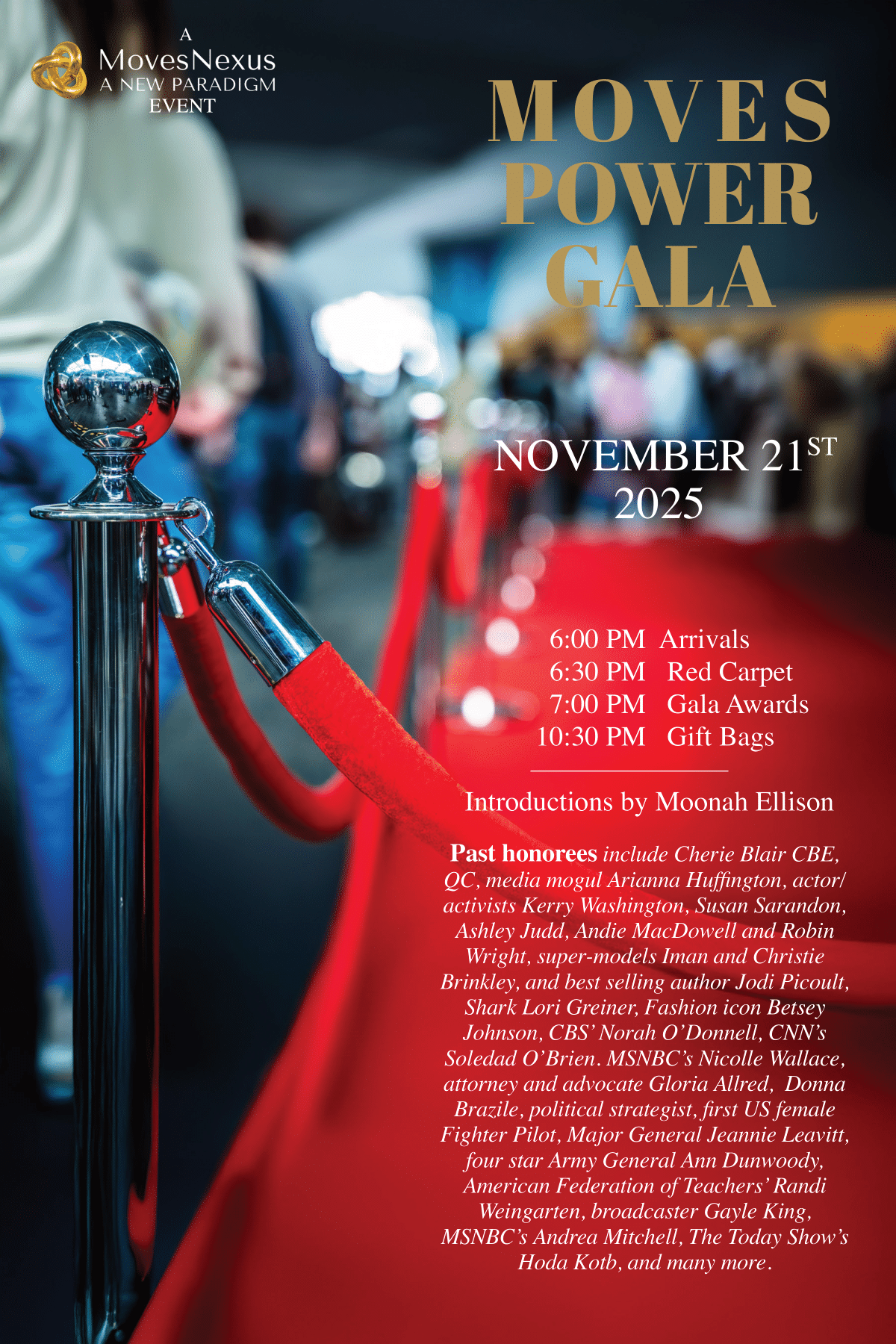
Table / Sponsorship Request Access
For additonal inforamtion send an email to pw25_awardsgala@newyorkmoves.net
or to request code over the phone 646.489.1633
Check Spam for code
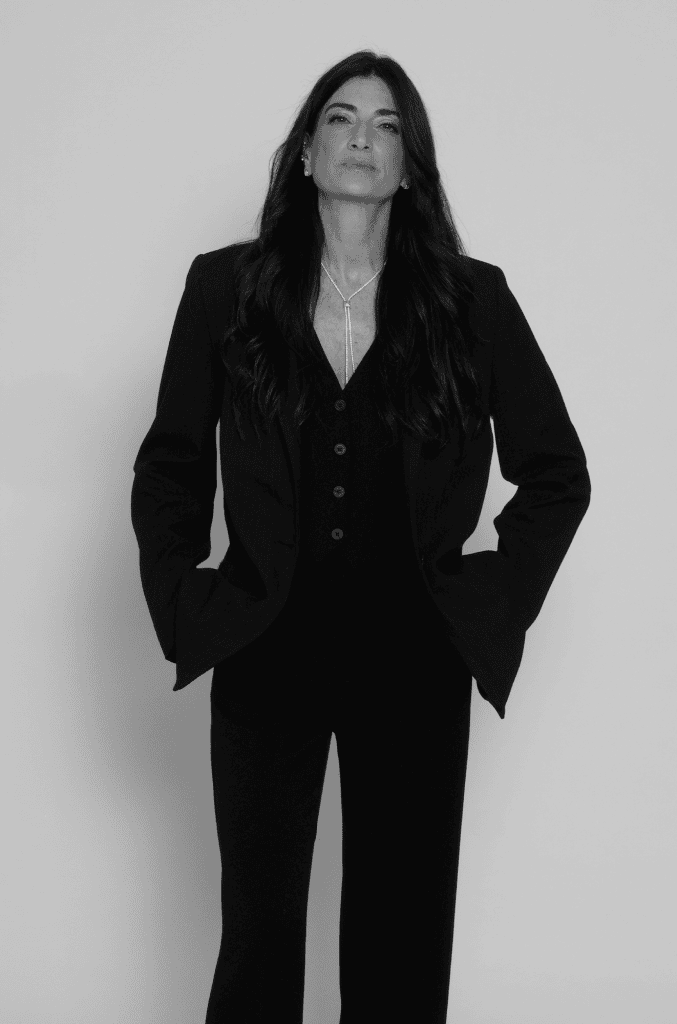
“You always need to be respectful, even in dissent. That’s something that was repeated in my house as my children were growing up, and it’s an important lesson. As leaders, we have to make difficult decisions, and it’s really important to treat people with dignity. You can be direct, hold high standards, and make really tough calls, but you must remain respectful.”
In a world shaped by rapid change, uncertainty, and digital influence, what qualities define power and leadership in 2026?
I think true power is the ability to create clarity and earn trust with people when times are uncertain.
I’ve learned this through the different periods we’ve experienced, from the recession in the early 2000s and the aftermath of 9/11 to another financial crisis, COVID, and now the tariff situation. Leadership is especially important during those periods. It requires conviction, but also curiosity and humility to change course when the facts change, because things are constantly evolving.
After 30 years in fashion, I’ve also learned that your impact isn’t measured only by the decisions you make, but by the people you grow under your leadership.
From climate change and AI ethics to mental health and economic inequality, which global issue do you believe leaders can no longer afford to ignore?
I think mental health. We ask people to constantly adapt, absorb enormous amounts of information, and perform under pressure. We have to acknowledge that sometimes this comes with an emotional cost.
I’ve always loved going to work and loved what I do, and it’s important to me to have a good time while I’m doing it. There’s a balance between asking a lot of people and making the workplace somewhere they can enjoy and feel good about being.
That involves setting realistic expectations and making sure people know they can ask for help. Asking for help shouldn’t carry a negative connotation.
I also think the younger generation has helped change the conversation. They’ve opened the eyes, minds, and ears of leadership to think and act differently and create better working environments. I really respect and appreciate that.
Can you share a defining challenge or setback that ultimately became a turning point in your personal or professional life?
I don’t think there was one defining moment, but I would say that every time I changed jobs, it was a defining moment because you have to learn how to start again.
You invest so much of yourself in a role, a company, or a brand. When you care deeply about your work, your identity can become tied to it. Learning to start over is challenging, especially in roles where you’ve been fixing or building something. It can feel as though you’re going backward, and it takes time.
But what I’ve learned is that the experiences I’ve had along the way, and my ability to build something, actually travel with me. All the realizations from those different roles and experiences come with you. That’s really exciting.
You eventually develop a greater sense of accomplishment, discernment, and freedom in choosing what comes next. You know you can start again and build again. You also learn that you can’t rush the investment of time that something requires.
What moment in your life shaped the woman executive and changemaker you are today?
I think becoming a mother really changed me. It changed how I understood responsibility, time, and success.
Raising my children forced me to make difficult decisions, to be present when it mattered, and to recognize that my achievements in life have meaning beyond a title.
I think my children made me a better leader. They made me a more empathetic and compassionate leader. You begin to look at the world differently because you recognize that every child is someone’s child. That perspective has been incredibly meaningful to me.
In today’s culture of visibility and performance, what quality or virtue do you think society tends to overvalue?
I think it’s the appearance of certainty. We reward the person who sounds the most confident and has the answer immediately, but some situations deserve a little more thought.
I really respect when somebody says, “I don’t know yet,” and acknowledges that they’re going to do the work to figure it out. I’ve learned that I don’t always have the answers, and I don’t need to have them on the spot. It takes a lot of confidence to say, “Hold that thought. I’ll come back to you. I don’t know yet.”
We’re navigating unprecedented times, and we don’t have a rulebook or a playbook for everything. As things unfold, the facts can change. Sometimes it’s important to take a minute, reflect, and pull everything together before making a decision.
As leadership continues to evolve, what personal trait has been your greatest challenge to master?
I think patience has been my greatest challenge because everybody wants to move fast and make things happen quickly. Sometimes, however, you need to give something a minute. Ideas need a little more time.
In the industry I’m in, there’s an ability to connect creative vision with commercial reality. Sometimes you need patience and time to pull everything together.
I think that’s also one of the greatest strengths: understanding what makes a brand desirable and how to turn that into a business. It’s about connecting all the dots.
As a leader, you also have to understand that you’re working within a system of different people, opinions, and expectations. Things don’t always come together exactly as you want them to, and you have to learn to work with that.
What is one principal boundary or non-negotiable rule that you live by, regardless of pressure or circumstances?
You always need to be respectful, even in dissent. That’s something that was repeated in my house as my children were growing up, and it’s an important lesson. As leaders, we have to make difficult decisions, and it’s really important to treat people with dignity.
You can be direct, hold high standards, and make really tough calls, but you must remain respectful. I think that says a lot about your character and how you handle difficult situations.
In a quiet moment of reflection, what concerns, frustrations, or unanswered questions occupy your mind?
Something I’ve seen happening for years, and that I think is getting worse, is the loss of human connection.
We live in a world that’s increasingly connected digitally, which has done wonderful things. But I find that people are constantly communicating through chat apps and emails, even when someone is sitting right next to them.
People send a million emails back and forth to resolve something when the other person’s desk is just down the hall. They could simply walk over and have a conversation.
Some things are too difficult to communicate over email because you lose the nuances. You need to pick up the phone and have a dialogue.
I feel like we’re losing the actual human touch, especially now with AI coming into play. As leaders, it’s going to be our job to figure out how to bring people together.
Do you think technology and AI will ultimately have a positive or negative impact on human connection and the workplace?
I think it’s a little bit like when e-commerce first came along. Before that, the only way to buy something was to physically go to a store. Now, 15 or 20 years later, look at where we are.
It’s going to be impossible for people to ignore AI because it’s going to be a massive lifestyle change that we won’t be able to avoid.
I think it will be incredibly positive, although we also know there’s a lot of debate about the negative aspects. We just have to hope for the best.
It’s a little bit like saying, get on board, because if you don’t, you’re going to be left behind. It’s unfortunate, but it’s the reality of change.
What do you believe is the biggest risk facing humanity over the next decade, and what overlooked opportunity could create meaningful change?
For me, one of the biggest risks is fake news. With social media and the access everybody has to information, it’s becoming increasingly difficult to know what’s actually happening in the world. When you combine that with the loss of human connection, it’s concerning. If people stop listening to one another, problems become harder to solve. We need to be able to understand and trust one another.
There’s so much information being thrown at us at lightning speed that it’s difficult to know what’s real, what’s not real, and what we should focus on.
As for an opportunity, I would say mentorship. We’ve spoken before about the importance of mentorship and taking the time to mentor young people.
We need to help people develop good judgment and confidence. That influence can happen in the workplace, but it extends far beyond it. Taking the time to guide and support the next generation can help move the entire agenda forward.
What is your biggest fear?
My biggest fear is not continuing to evolve and change. The one thing that’s constant is change.
You can’t let fear get in the way of understanding, making choices, or being open to change. You have to recognize that there’s always something coming around the corner. Whatever the next chapter is, it’s going to be different. It’s always changing.
What’s the best piece of advice you’ve ever been given?
The best advice I received was from a boss a very long time ago. He told me, “Stop trying to get everyone to like you.”
He said I cared too much and reminded me that not everyone would like me. I’m a people pleaser. I want everybody to feel good and be happy, but the simple fact is that you can’t make that happen.
You learn that in leadership positions, you can be considerate, but not everybody is going to agree with your decisions or give you their approval. And that’s okay.
What is the most challenging thing you’ve ever had to overcome?
I think it was having to walk away from an opportunity that looked right on paper but ultimately wasn’t right for me.
Sometimes you just have to trust your judgment.
I’ve learned that success means having respect for the people I’m going to be working with, while also having room for the people and things that matter most in my life. It’s about finding that balance and doing work that I’m really proud of.
If I can’t check all of those boxes, then it’s simply not the right opportunity.
What’s one of the books that has had a meaningful impact on you?
One book that’s been near and dear to me lately might surprise you because it’s a children’s book: The Giving Tree by Shel Silverstein.
It’s a story that raises questions about love and generosity. When you read it as a child, you understand it from the child’s perspective. But when you’re an adult reading it, you understand it from a completely different perspective.
As a mother and as a leader, I think there’s a lot of wisdom in this book. Taking care of others matters deeply, but so does taking care of yourself.
There’s always somebody who needs something, whether it’s people at work or your children. But you have to stop and take care of yourself so that you can continue to show up as a good leader and an exceptional mother.
If you’re not taking care of yourself, you can’t be exceptional. We’re in an era where we’re finally able to say, “I have needs, too, and that’s okay. I need a minute for that.”
If you were listening to a podcast right now, what would the subject be?
AI. It’s coming at lightning speed, and I’m learning more and more every day.
It’s not necessarily something that’s being discussed in the workplace, so it’s homework that you need to do on your own. You have to practice, understand the tools coming to market, and educate yourself.
I’ve been really interested in teaching myself and absorbing as much as I can. It’s something I feel I need to understand, and I’m constantly looking for ways to learn more.

Check Spam for code