Table / Sponsorship Request Access
For additonal inforamtion send an email to pw25_awardsgala@newyorkmoves.net
or to request code over the phone 646.489.1633
Check Spam for code
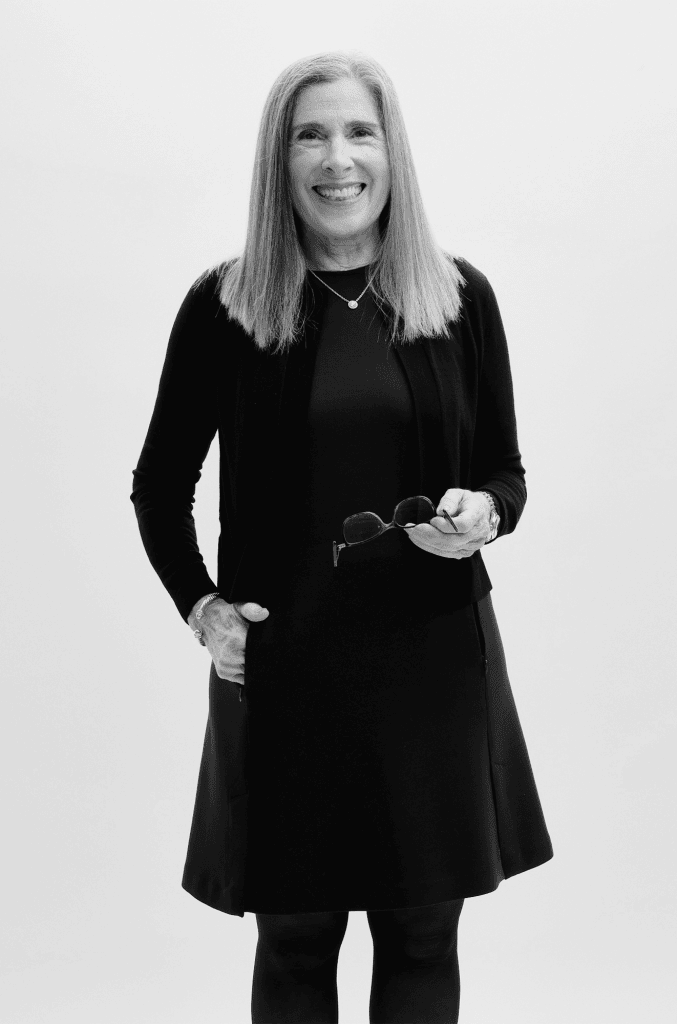
“That’s what I try to do with the people I mentor: recognize their strengths, gifts, talents, and possibilities and help bring those qualities to life. I would love to become even better at recognizing that potential earlier.”
What qualities define true power in leadership today?
Authenticity, emotional intelligence, resilience, and communication. A leader has to be genuine and able to connect with different people, align them around a mission, and stay grounded in their values even in uncertainty. Leadership also isn’t about having a title. It’s about seeing what needs to be done, stepping into that space, taking ownership, and moving things forward.
What global issue can leaders no longer afford to ignore?
The ethics of AI, particularly as it intersects with medicine and genetic information. We’re moving toward a world where enormous amounts of deeply personal health and genomic data will exist, but we still don’t have adequate guidelines governing who has access to it, how it’s protected, or how it can be used. That becomes especially important when we’re talking about children and newborns whose genetic information could follow them for their entire lives.
What challenge or setback became a defining turning point in your career?
I’ve learned to see mistakes as opportunities for discovery. One of my trainees was performing a laboratory technique incorrectly, but he was getting consistent results. Instead of dismissing it as a failure, we investigated why—and that mistake opened an entirely new area of research that ultimately led to another 15 years of grant support. You don’t learn by doing everything right all the time.
What moment most shaped you as a leader and changemaker?
There wasn’t one single moment; it was an evolution. Early in my career, success was about what I could accomplish as a physician-scientist, nephrologist, and educator. Over time, that changed into asking whose lives I’ve touched and what I’ve done for other people. Becoming chair of a clinical department was particularly transformative because it required me to draw on everything I had learned throughout my career and apply it in an entirely different leadership role.
Was there an early experience that changed the direction of your career?
In my first year of medical school at Columbia, I failed a quiz on kidney physiology. I had never failed an exam before and thought I was going to be kicked out of medical school. Instead, I was sent for remediation with the chief of nephrology. He became an extraordinary mentor, took me under his wing, and helped set me on the path to becoming a pediatric nephrologist and physician-scientist. That experience showed me how profoundly one mentor can change someone’s life.
What personal trait has been your greatest challenge to master?
Imposter syndrome. People may see me as a confident physician-scientist and institutional leader, but I’ve spent much of my career learning to trust myself and my own voice. I’m also not afraid to say, “I don’t know.” I want to surround myself with people who are smarter than I am in areas where I have more to learn, listen to them, ask questions, and use that knowledge to move forward.
What has become one of your greatest strengths as a leader?
Mentorship—seeing the potential inside another person. I think of Michelangelo looking at a block of marble and already seeing the figure within it. That’s what I try to do with the people I mentor: recognize their strengths, gifts, talents, and possibilities and help bring those qualities to life. I would love to become even better at recognizing that potential earlier.
What’s your biggest fear?
The mistrust of scientific evidence. Decades of scientific discovery have been rigorously tested, validated, and peer-reviewed, yet we’re seeing growing distrust of science and things like vaccine hesitancy. I worry that this will erode both future scientific discovery and the health of the population.
What’s the best advice you’ve ever received?
Trust yourself. Earlier in my career, I produced research findings that a mentor told me never to publish because no one would trust the data. Years later, I returned to the work, repeated the experiments, got the same results, and that research ultimately contributed to an area that helped sustain my grant funding. Whether I’m working as a scientist or making decisions as a department chair, I’ve learned that there won’t always be a certain answer. At some point, you have to trust your own voice.
What’s a must-read for you?
The Correspondent. It’s a beautiful book told through letters, following a woman navigating challenges, relationships, and different stages of her life. What especially resonated with me was the permanence of handwritten letters. Emails and texts disappear, but a letter can remain with you for decades. I still have handwritten letters from one of my own mentors, and when I open them, it’s almost as if he’s there again.
What concerns you most when you think about the future of the world?
I think about my three grandsons and what kind of world they’ll inherit. I worry about freedom of speech, individual and population health, and the enormous amount of misinformation people encounter online. Young people increasingly rely on the internet as their source of information, and one of the biggest questions for me is how we’re going to teach them to distinguish what is true from what is false.
Check Spam for code