2025

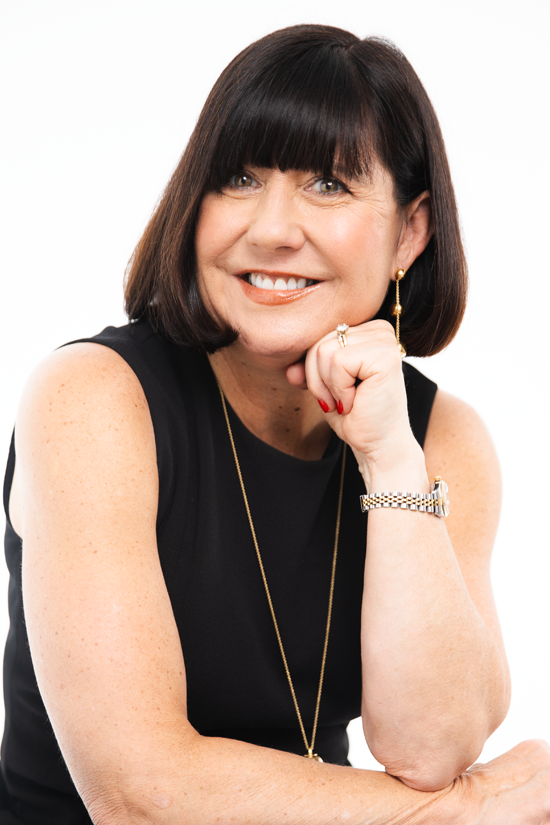
Monica Kraft, MD

Professor and System Chair Department of Medicine Icahn School of Medicine at Mount Sinai, Associate Dean for Clinical Affairs

“Over time, I realized how important it is to take chances and that it’s okay to fail—some of my failures have led to the best opportunities.”

What do you feel makes for the qualities of a person in Power?

A person with power should understand how to best use that power to lead well. In my opinion, that means understanding who one is leading, knowing one’s goals for the group, and empowering the group to meet those goals. The latter issue is key, as one will need to understand stakeholders’ needs, values, and perspectives; that will take obtaining support from stakeholders so they feel a sense of ownership in what you are trying to achieve. The qualities needed to achieve what I have described include good communication skills, high emotional intelligence, flexibility, and resilience.

Of all the world issues we face—gun violence, gender equality, child poverty—what do you feel are the most pressing conversations for change?

Of the issues you list, I certainly worry a lot about gun violence, particularly in this country. I feel like, as humans, we are very imperfect; I don’t feel we can handle the ability to have access to weapons so easily. We need to have a frank conversation about where we’re going with that and what it’s done to the fabric of our country.

Gender equality and equity are also issues that concern me deeply. I’ve seen positive changes over the years, but recently there’s been a shift backward. We as women are not being heard the way we once were, and I am very saddened by that trend.

How does the space of science need to evolve and have its story told?

Thank you for asking that—it’s near and dear to my heart. I’ve been in science and medicine my entire career, caring for patients and doing research. The integration of research and clinical care is critical to advancing therapies and cures that improve people’s lives. However, mistrust has developed, and we as a scientific community need to do a better job of educating patients that science is an iterative process—it’s not always immediately correct.

If you look at chronic diseases like heart or lung disease and cancer, the progress over the past 20 or 30 years is extraordinary. Our tools of inquiry have advanced so much. But there’s a lot of misinformation out there, and the public often doesn’t know what to believe. It’s our job as a medical and scientific community to educate and ensure the right information is out there.

Have you encountered a difficult challenge in your career, and how did you overcome it?

A challenge I encountered occurred when I was a chief resident—an extra year of training after medical school where you lead residents. At a public function, my supervisor was very complimentary to my co-chief resident (a man) about his medical knowledge and clinical skills. When he came to me, all he said was, “Monica, she got married this year.”

I was upset and initially thought I wouldn’t stay on for the year. But a trusted mentor advised me not to resign—it would have been the wrong decision. It was a difficult year, feeling unwanted and undervalued, but by the end of it, the same supervisor publicly complimented my work. Years later, he continued to speak highly of that time. It taught me a lot about perseverance and patience.

What defining moment led you to where you are today?

Early in my career at National Jewish Health and the University of Colorado, I was asked to lead a clinical unit for physiologic testing in patients with severe lung disease. I had no prior experience running a clinical program, but the role allowed me to integrate research with patient care.

That experience led to my next role at Duke University, where I designed and led a center for asthma, allergy, and airway disease. Patients received both clinical care and access to cutting-edge research trials. That integration of care and research shaped the rest of my career—it leads to better outcomes for patients.

Which traits are you most comfortable and uncomfortable with in yourself?

I used to be afraid of failure and worried a lot about it. Over time, I realized how important it is to take chances and that it’s okay to fail—some of my failures have led to the best opportunities. Now I’m very comfortable in that space. If I could give advice to my younger self, it would be: don’t be afraid to take chances. Rejection often leads to redirection, and that can be very productive.

What is your one unbreakable rule in life?

To be true to myself and never break trust.

Who do you yell at quietly in your head when you’re upset?

My 13-year-old self, especially when I’m mad at myself!

What do you consider a big risk and a small risk?

A big risk would be taking on a challenge that affects my family, such as moving for a new job. Having done that more than once, I know how important it is to weigh the pros and cons and aim for a win-win outcome.

Small risks can be things like taking on a new professional role or research direction—decisions that might affect my bandwidth and personal time but still contribute to growth.

What is one of your biggest fears?

My biggest fear is for the next generation and what kind of world they’ll have. Beyond science and medicine, I worry about climate change, poverty, and violence. I want to leave behind a world where they can flourish. My son is a wonderful young man, and I want him to live in a world where he can be happy and achieve his goals.

What is the best piece of advice you’ve ever been given?

Don’t be afraid to take chances and fail—rejection is often redirection, and it can be a very positive thing. And remember to have fun and be in the moment.

If you could have any animal or pet, what would it be and why?

I already have a wonderful dog named Annie! She’s a rescue we adopted during the pandemic—a 60-pound terrier mix with six different breeds. She has a sweet personality and has adjusted well from Arizona to New York life. She even loves cats, so we’ve thought about adopting one for her.

Table / Sponsorship Request Access

For additonal inforamtion send an email to pw25_awardsgala@newyorkmoves.net or to request code over the phone 646.489.1633 

Check Spam for code

For additonal inforamtion send an email to pw25_awardsgala@newyorkmoves.net or call 212.396.2394 or 646.489.1633 (also text for rapid response)